
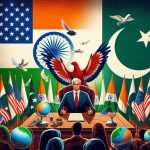





GAZA (Gerakan Akhir Zaman), May 12, 2025 – The United States’ mediation in the India-Pakistan conflict resulted in a ceasefire agreement on May 10, 2025. However, several Pakistani officials and analysts have expressed concerns that the agreement favors India more than Islamabad.
A Rushed Mediation Process
Observers note that the U.S. acted swiftly in brokering the ceasefire, with limited consultation among Pakistan’s top military and political leaders. Many in Islamabad argue that Pakistan should have had more time to evaluate the long-term strategic consequences of the agreement before committing to it.
Michael Kugelman, a South Asia analyst based in Washington, highlighted the significance of the U.S. reaching out to Pakistan’s Army Chief, General Asim Munir, during the crisis. However, he also pointed out that Pakistan may feel pressured to accept the deal without receiving adequate security assurances.
India Gains the Advantage?
The U.S. has maintained closer diplomatic ties with India than Pakistan, and the agreement appears to benefit New Delhi more significantly. Former U.S. President Donald Trump praised both India and Pakistan for their “wisdom and intelligence” in accepting the ceasefire, but Islamabad remains skeptical about whether the arrangement adequately protects its interests.
Uncertainty About Pakistan’s Security Guarantees
Although the ceasefire has been implemented, Pakistan continues to question its long-term viability. Analysts fear that India might still conduct limited military operations without facing major repercussions, whereas Pakistan has fewer guarantees regarding its ability to defend itself.
Geopolitical Impact
This agreement has drawn international attention, particularly from countries with strong ties to Pakistan, such as China and Turkey. Beijing has stated that it will closely monitor the situation, while Turkey has called for a fairer resolution that considers Pakistan’s strategic concerns.
With these complex geopolitical dynamics at play, the India-Pakistan conflict remains a key issue in global politics. The world now waits to see how Pakistan will respond to the agreement in the coming days.


