


Blog

  • Indian PM Narendra Modi: Military Operations Only Temporarily Paused, Conflict May Resume

    Indian PM Narendra Modi: Military Operations Only Temporarily Paused, Conflict May Resume

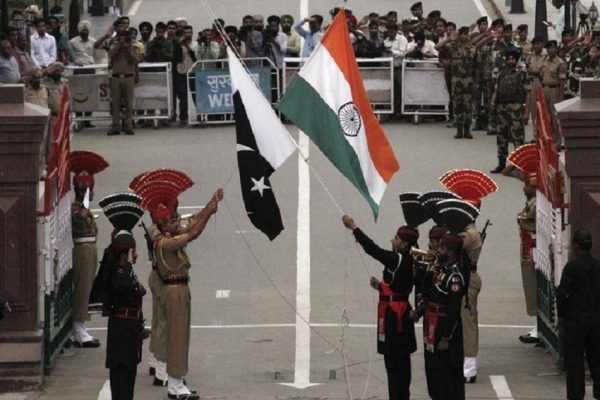
    New Delhi, May 13, 2025 – Indian Prime Minister Narendra Modi has declared that India’s military actions against Pakistan are only temporarily paused, not permanently halted. His statement comes just days after the ceasefire agreement brokered by the United States on May 10, 2025.

    India Stays Prepared for Retaliation

    In his speech on May 12, 2025, Modi emphasized that India will not hesitate to retaliate against any act of terrorism that threatens its national security. He asserted that India makes no distinction between terrorist groups and the nations that support them, a clear reference to Pakistan.

    Pakistan Accused of Harboring Terrorism

    Modi accused Pakistan of prioritizing aggression against India over addressing terrorism within its borders. India claims that the April 22, 2025, attack in Kashmir, which resulted in 26 civilian casualties, was orchestrated by militant groups operating from Pakistan.

    Lingering Tensions Despite Ceasefire

    Although the ceasefire agreement was reached, Indian and Pakistani military officials are closely reviewing its terms to ensure compliance. Any violations or renewed hostilities could rekindle the conflict, as tensions between the two nations remain high.

    Geopolitical Impact

    Modi’s statement has raised concerns that the conflict could reignite at any moment, particularly if India perceives a renewed terrorist threat from Pakistan. China and the United States have urged both nations to remain committed to diplomatic solutions, warning against further escalation.

    World leaders are now closely monitoring how India and Pakistan will uphold the ceasefire agreement, as Modi’s remarks signal the possibility of future military action.

  • India Constructs Global Narrative: Framing Conflict with Pakistan as Counterterrorism

    India Constructs Global Narrative: Framing Conflict with Pakistan as Counterterrorism

    GAZA (Gerakan Akhir Zaman), May 12, 2025 – India is increasingly shaping a global narrative that frames its conflict with Pakistan as part of a counterterrorism operation, a strategy reminiscent of Israel’s approach in its conflict with Palestine.

    Linking the Attack to Militant Groups

    The Indian government claims that the April 22, 2025, attack in Pahalgam, Kashmir, was carried out by militant groups based in Pakistan. Authorities have cited Lashkar-e-Taiba (LeT) and Jaish-e-Muhammed (JeM) as key actors behind the attack.

    However, according to a Republika report, this attack follows a familiar pattern of India presenting itself as a victim of cross-border terrorism. Despite strict surveillance in Kashmir, including biometric checkpoints, drone monitoring, and electronic surveillance, India has failed to provide concrete evidence linking Pakistan directly to the incident.

    Influencing International Opinion

    India has systematically leveraged media to portray Pakistan as a state sponsor of terrorism, seeking Western political and military support.

    A TRT Global report reveals that following the Pahalgam attack, Muslims in India faced heightened suspicion and social pressure, indicating that the Indian government’s narrative may be influencing domestic policies and public perception, similar to Israel’s approach in its handling of Hamas.

    Former Indian Foreign Minister Subrahmanyam Jaishankar reinforced the narrative by stating that India has the right to defend itself against terrorist threats, a position that strengthens international legitimacy for India’s military operations in Pakistan.

    Criticism of India’s Narrative

    Despite growing acceptance of India’s stance among some Western nations, analysts question the validity of its claims. Republika reports that, despite India’s high-security measures in Kashmir, there is no biometric proof or CCTV footage directly linking Pakistan to the Pahalgam attack.

    Global leaders continue to monitor how this narrative will impact international support for India and its broader implications for regional stability in South Asia.

  • U.S. Mediation in the India-Pakistan Conflict Sparks Criticism in Islamabad

    U.S. Mediation in the India-Pakistan Conflict Sparks Criticism in Islamabad

    GAZA (Gerakan Akhir Zaman), May 12, 2025 – The United States’ mediation in the India-Pakistan conflict resulted in a ceasefire agreement on May 10, 2025. However, several Pakistani officials and analysts have expressed concerns that the agreement favors India more than Islamabad.

    A Rushed Mediation Process

    Observers note that the U.S. acted swiftly in brokering the ceasefire, with limited consultation among Pakistan’s top military and political leaders. Many in Islamabad argue that Pakistan should have had more time to evaluate the long-term strategic consequences of the agreement before committing to it.

    Michael Kugelman, a South Asia analyst based in Washington, highlighted the significance of the U.S. reaching out to Pakistan’s Army Chief, General Asim Munir, during the crisis. However, he also pointed out that Pakistan may feel pressured to accept the deal without receiving adequate security assurances.

    India Gains the Advantage?

    The U.S. has maintained closer diplomatic ties with India than Pakistan, and the agreement appears to benefit New Delhi more significantly. Former U.S. President Donald Trump praised both India and Pakistan for their “wisdom and intelligence” in accepting the ceasefire, but Islamabad remains skeptical about whether the arrangement adequately protects its interests.

    Uncertainty About Pakistan’s Security Guarantees

    Although the ceasefire has been implemented, Pakistan continues to question its long-term viability. Analysts fear that India might still conduct limited military operations without facing major repercussions, whereas Pakistan has fewer guarantees regarding its ability to defend itself.

    Geopolitical Impact

    This agreement has drawn international attention, particularly from countries with strong ties to Pakistan, such as China and Turkey. Beijing has stated that it will closely monitor the situation, while Turkey has called for a fairer resolution that considers Pakistan’s strategic concerns.

    With these complex geopolitical dynamics at play, the India-Pakistan conflict remains a key issue in global politics. The world now waits to see how Pakistan will respond to the agreement in the coming days.

  • Terrorism as a Tool: India Learning to Control the Narrative Like Israel

    Terrorism as a Tool: India Learning to Control the Narrative Like Israel

    GAZA (Gerakan Akhir Zaman)The conflict between India and Pakistan has once again captured global attention following the terrorist attack in Pahalgam, which claimed 26 lives. In response, India launched Operation Sindoor, targeting nine locations identified as terrorist camps in Pakistan and Pakistan-occupied Kashmir. While India describes this operation as measured and non-escalatory, Pakistan is working to shape global opinion by portraying the attacks as strikes on civilian areas.

    However, this conflict is not just about military action—it is also a battle of narratives and diplomacy. India appears to be increasingly mastering the art of narrative control, a strategy long employed by Israel in managing its international stance regarding Palestine.

    Controlling the Narrative: Lessons from Israel

    Israel has successfully employed communication strategies that allow it to shape global perceptions of its conflict with Palestine. These tactics involve several key aspects:

    1. Justifying Military Action Through Terrorism
      Israel often frames its military operations as counterterrorism measures, making them appear as defensive actions rather than aggression. India is adopting a similar approach by linking Pakistan to terrorist activities, ensuring that its military operations are perceived as anti-terrorism efforts rather than acts of war.
    2. Swift and Strategic Diplomacy
      Following Operation Sindoor, India immediately reached out to major global players such as the United States, United Kingdom, Saudi Arabia, UAE, and Russia, ensuring that Pakistan’s narrative does not dominate international discourse. Israel uses a similar approach, securing diplomatic backing before opponents can influence the global conversation.
    3. Media Control to Shape Perception
      India is increasingly restricting media access and guiding news narratives to align with its official stance. Israel has long controlled the narrative surrounding its military actions in Gaza and the West Bank, ensuring international media focuses more on its security concerns rather than civilian casualties.
    4. Leveraging Influence in International Forums
      Pakistan attempted to bring this issue to the UN Security Council, but faced tough questions from council members, including China. Like Israel, India understands that maintaining strong allies in global institutions prevents its opponents from steering the discussion.

    India’s approach to narrative control is not just shaping its conflict with Pakistan—it has broader implications:

    1. Effects on Civilians

    Beyond official statements and diplomatic maneuvering, civilians in Pakistan-occupied Kashmir bear the real consequences of military operations. Similar to how Palestinian communities suffer from clashes between Israel and Hamas, residents in disputed areas now face the uncertainty brought by India’s strategic actions.

    At the same time, in India, successful narrative management may strengthen nationalism but also deepen anti-Pakistan sentiments, potentially fueling long-term regional instability.

    2. Responses from Major Powers

    Just as Israel continues to receive unwavering support from the U.S. in its Palestinian conflict, India is actively securing backing from key global players. Washington, London, and Riyadh seem to align with India’s stance, citing Pakistan’s responsibility in controlling terrorist activities within its borders.

    3. Long-Term Effects on Regional Diplomacy

    If India continues to perfect its narrative strategy, Pakistan may find itself increasingly marginalized in global diplomacy. In recent years, Pakistan has struggled to convince the world of its position in this ongoing conflict, particularly given its challenges in handling militant groups within its territory.

    Israel has strengthened its global standing through structured communication strategies, and now India appears to be adapting similar tactics to bolster its position in its long-standing conflict with Pakistan.


    India is proving that in modern warfare, military power alone is not enough—controlling the narrative is essential to shaping how the world perceives a conflict. With an approach similar to Israel’s, India is reinforcing its global position. However, the real question remains:

    Will this strategy lead to a lasting resolution, or will it only prolong regional tensions?

    Is it true that this only creates peace in the region or do they intend to wipe out Muslims from the world?

  • India Follows Israel’s Playbook: Undermining Pakistan Under the Pretext of Terrorism

    India Follows Israel’s Playbook: Undermining Pakistan Under the Pretext of Terrorism

    GAZA (Gerakan Akhir Zaman) – Tensions between India and Pakistan have escalated once again, particularly in the disputed region of Kashmir. But this time, India’s approach raises a pressing question: Is New Delhi adopting the same tactics Israel uses against Palestine?

    India has repeatedly labeled areas near the Pakistan border — especially those with a Muslim majority — as “terrorist breeding grounds.” This narrative mirrors Israel’s long-standing justification for its military operations in Gaza and the West Bank under the banner of “security” and “counterterrorism.”

    Military operations without international oversight, restricted access to affected zones, and a dominant domestic media narrative all signal a familiar pattern — one we’ve seen in Israel’s treatment of Palestinian territories.

    Even more alarming is the silence of much of the global media. Just like the Palestinian issue, the mainstream narrative seems heavily tilted in favor of the stronger power — while civilian suffering continues in the shadows.

    Ordinary people in Kashmir, like those in Palestine, are becoming pawns in a geopolitical game marked by dominance, propaganda, and unchecked military actions.

    Is the world going to stay silent again?

    Can Pakistan resist this wave of militarized diplomacy cloaked in the language of anti-terrorism?

    Or are we witnessing the early stages of a new kind of occupation — one that’s been tested, perfected, and now replicated?